The Kalinga War: Ashoka’s Battle Its Historical Impact
Introduction
The Kalinga War is remembered as one of the most pivotal conflicts in ancient Indian history. Fought around 261 BCE between the Mauryan Empire under Emperor Ashoka and the independent kingdom of Kalinga, the war’s consequences went far beyond territorial conquest. It shaped the course of Indian civilization and marked a profound transformation in Ashoka’s life and governance philosophy
This article explores the geography of Kalinga, the political and cultural background leading to the war, the emperor behind the conquest, and the lasting historical significance of the war based on diverse sources.
Geography of Kalinga: The Land at the Heart of the Conflict
Kalinga was a prominent region located on the eastern coast of India, corresponding largely to the modern-day state of Odisha, parts of northern Andhra Pradesh, and some portions of southern West Bengal.
Key Geographical Features:
- Location: Coastal plains along the Bay of Bengal, making Kalinga an important hub for maritime trade.
- Rivers: The region was nourished by several rivers, notably the Mahanadi, Brahmani, and Rushikulya, providing fertile land for agriculture.
- Terrain: Kalinga’s geography comprised coastal flatlands, river deltas, and hilly terrains in the interior, which offered natural defensive advantages.
This geography contributed to Kalinga’s wealth and independence. Its ports facilitated commerce with Southeast Asia and beyond, making it a prosperous kingdom resistant to foreign domination.
Historical and Political Context: The Rise of Mauryan Ambitions
The Mauryan Empire, founded by Chandragupta Maurya around 321 BCE, was the first large-scale empire in India, stretching across the subcontinent under his grandson Ashoka by the mid-3rd century BCE. However, Kalinga remained unconquered, maintaining its autonomy and republican governance system, often governed by councils rather than a monarch.
Emperor Ashoka ascended the throne circa 268 BCE. Early in his reign, he focused on expanding the Mauryan Empire’s boundaries, and Kalinga was the last significant independent kingdom standing between Mauryan control and the eastern coast.
The Kalinga War: Battle and Aftermath
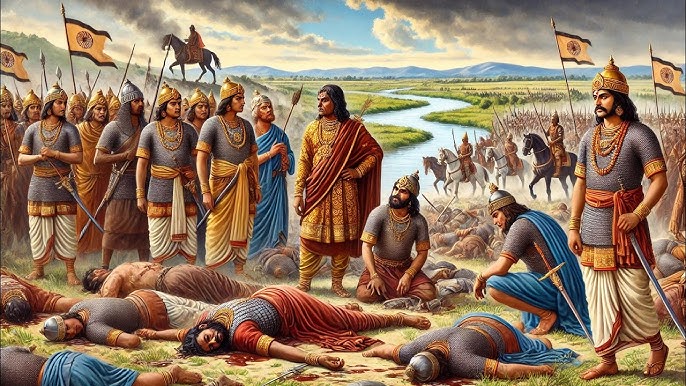
The war took place in 261 BCE and was reportedly a massive and bloody conflict. Though the Mauryan military was powerful, Kalinga’s defenders fiercely resisted, determined to preserve their independence.
Sources and Accounts:
- Ashoka’s Rock Edict XIII (primary source): Ashoka himself inscribed his reflections on the war’s destruction. He admitted to the immense loss of life and suffering and expressed deep remorse.
- Buddhist Chronicles such as the Mahavamsa and Dipavamsa: These texts portray the war as a turning point for Ashoka, catalyzing his conversion to Buddhism and adoption of non-violence.
- Greek and Roman historians of the period provide indirect confirmation of the Mauryan Empire’s expansionist campaigns, including the conquest of Kalinga.
Impact of the War:
- Estimated casualties include around 100,000 deaths, with many more wounded and displaced.
- 150,000 people were taken captive and deported.
- The scale of devastation shocked Ashoka profoundly.
The war ended with Kalinga’s annexation into the Mauryan Empire, but it also marked the end of Ashoka’s military campaigns.
Emperor Ashoka: From Conqueror to Advocate of Peace
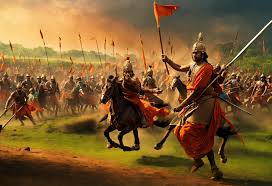
Ashoka’s reign post-Kalinga War is one of the most documented and fascinating periods of Indian history. Before the war, Ashoka was a typical monarch focused on conquest and empire-building. Afterward, he adopted Buddhism and made it the moral foundation of his rule.
Ashoka’s Transformation:
- He embraced the principle of Ahimsa (non-violence).
- Promoted Dhamma (moral law) emphasizing compassion, truthfulness, and respect for all life.
- Issued edicts carved on rocks and pillars throughout his empire to spread messages of ethical conduct, religious tolerance, and welfare.
- Sponsored the construction of hospitals, rest houses, roads, and irrigation works.
- Sent Buddhist missionaries abroad to places such as Sri Lanka, Central Asia, and Southeast Asia, helping spread Buddhism internationally.
https://sypertimes.com/category/uncategorized
Kalinga in the Mauryan Era and Beyond
Post-war, Kalinga was integrated into the Mauryan Empire and administered directly from Pataliputra (modern Patna), the capital. The region remained important for its economic resources and coastal trade.
Kalinga later evolved under various rulers and was a center for art, culture, and religion—especially Buddhism and later Hinduism. Its maritime trade links helped spread Indian culture across Asia.
Historical Significance of the Kalinga War
- Turning Point in Ashoka’s Reign: The war fundamentally altered Ashoka’s worldview and governance style, ushering in a rare example of a ruler who rejected violence after conquest.
- Spread of Buddhism: Ashoka’s patronage post-Kalinga helped Buddhism flourish not only in India but across Asia.
- Ethical Governance Model: Ashoka’s edicts remain one of the earliest examples of political leaders promoting moral responsibility, welfare, and human rights.
- Cultural Legacy: The Kalinga War is often studied as a case of how war and suffering can lead to profound human change and philosophical advancement
Diverse Historical Sources on the Kalinga War
- Ashokan Edicts: Found across India and in places like Kandahar (Afghanistan), these inscriptions provide first-hand insight into Ashoka’s policies and reflections.
- Buddhist Texts: Offer narrative context, often portraying Ashoka as a model ruler whose remorse led to peace.
- Greek and Roman Writers: Authors like Megasthenes (Chandragupta’s ambassador) mention the Mauryan empire’s vast reach, corroborating the large scale of Ashoka’s conquests.
- Archaeological Evidence: Pillars, stupas, and ruins in Odisha and nearby regions confirm the cultural and religious shifts post-war.
Conclusion
The Kalinga War is not just a story of conquest but a narrative about the consequences of violence and the potential for transformation. The conflict’s devastating toll on Kalinga’s people became a catalyst for one of history’s most remarkable shifts—a warrior king turning into a peace-loving emperor.
Kalinga’s geography made it a jewel coveted by empires, but it was Ashoka’s response to the war that has made the Kalinga War legendary. From the bloody battlefields to the inscriptions carved in stone, the legacy of this war resonates through Indian history and beyond, highlighting themes of power, morality, and redemption.